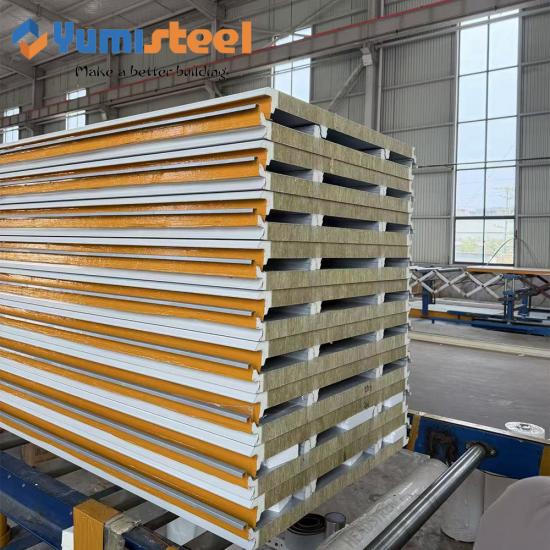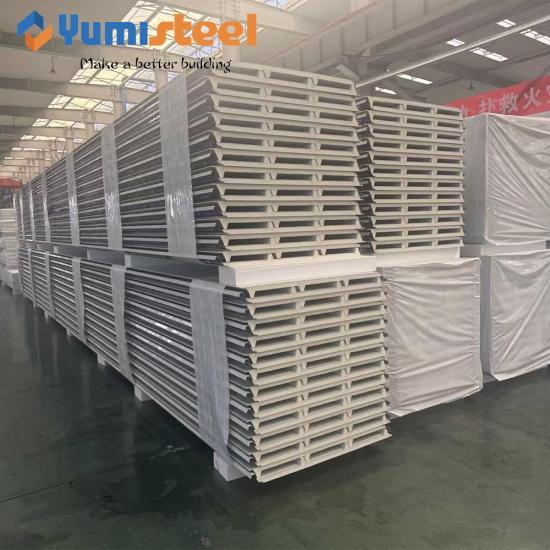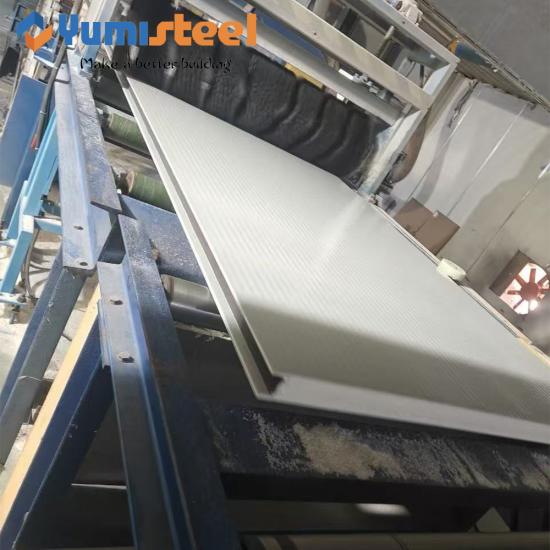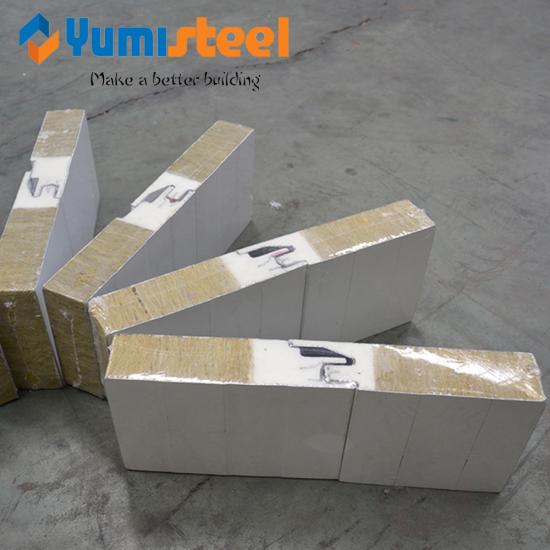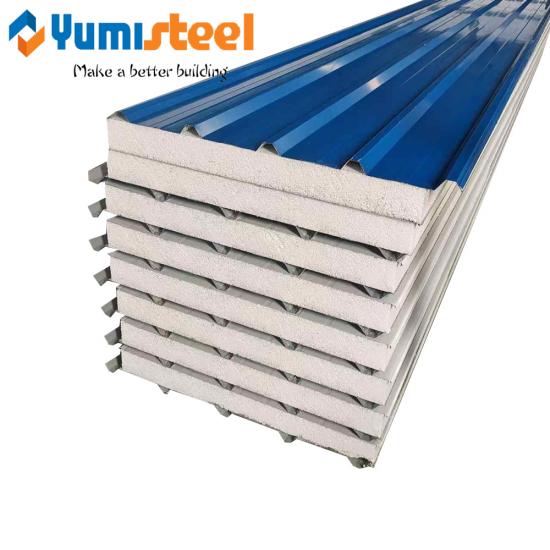

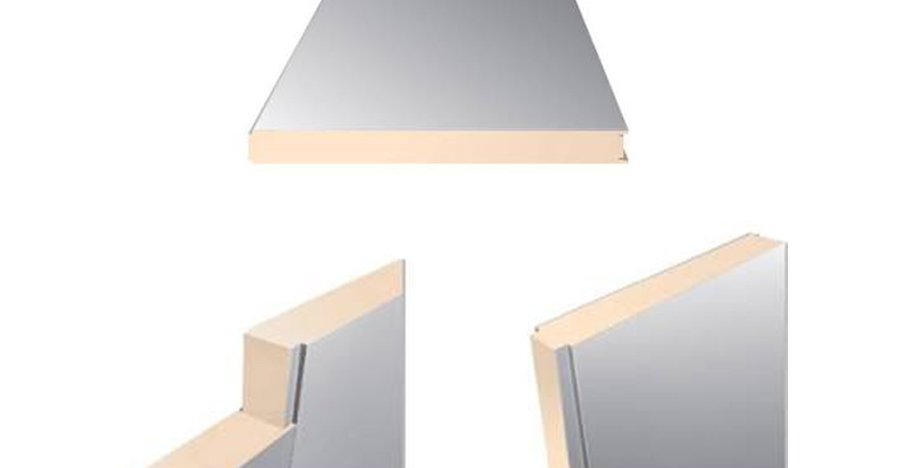
When sourcing insulated sandwich panels, you will often see two acronyms: PU and PIR. They look similar, often come from the same suppliers, and both offer excellent thermal insulation. But they are not the same material, and the difference matters,especially when fire safety, temperature extremes, or project budget come into play.
Both PU (polyurethane) and PIR (polyisocyanurate) are rigid foams made from isocyanate and polyol components. The key distinction lies in their chemical structure. PIR foam is essentially a modified polyurethane with a higher isocyanate index,often 200 to 500, compared to around 100 for standard PU. This higher index creates more cross-linked isocyanurate ring structures, which give PIR its superior fire performance and thermal stability.
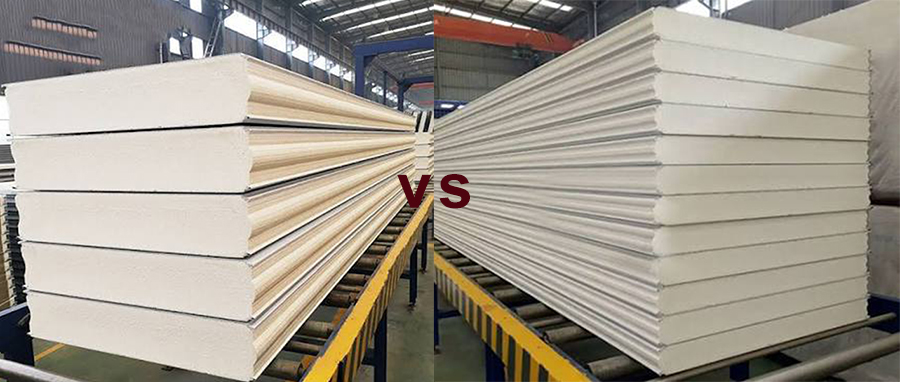
In practical terms: PIR is a more tightly knit version of PU. That structural difference drives nearly every performance gap between the two.
The most significant difference is fire behavior. Standard PU foam typically achieves a B2 fire rating, and even with flame retardants, it rarely exceeds B1 without compromise. PIR, by contrast, naturally reaches B1 and can achieve B-s1,d0 classification in certified products.
Why does this matter? In many regions,especially Europe and the Middle East,building codes require B1 or better for wall and roof panels. A standard PU panel may fail inspection, forcing you to switch materials mid-project or face delays. PIR also produces less smoke and resists melting droplet formation, which are critical safety factors in enclosed spaces.
Counterintuitively, the thermal conductivity of PU and PIR foams is nearly identical. PU ranges from 0.022 to 0.026 W/m·K, while PIR typically falls between 0.019 and 0.023 W/m·K. In real-world terms, this difference is marginal,a 100mm PU panel and a 100mm PIR panel will deliver very similar insulation values.
Where PIR edges ahead is long-term stability. Under sustained high temperatures, PU foam can degrade faster, losing insulation efficiency over time. PIR maintains its thermal performance better in hot environments and at temperature extremes, making it the preferred choice for low-temperature cold storage and tropical climates.
PU panels perform well in standard conditions, typically stable from -35°C to +80°C. PIR extends this range significantly, with stability from -55°C to over +120°C in some formulations. For blast freezers, ultra-low-temperature warehouses, or exterior walls in hot climates, PIR offers more reliable long-term performance.
PIR panels cost roughly 15% to 25% more than comparable PU panels. That premium buys you better fire safety, wider temperature tolerance, and improved aging resistance. But PIR has a downside: the foam is more brittle than PU. Rough handling during shipping or careless cutting can cause internal cracking, which compromises insulation performance. PU, being tougher and more flexible, is more forgiving during installation.
There is also a market integrity issue. Some suppliers sell "PIR" panels that are merely PU foam with extra flame retardant. These counterfeit products cannot deliver true PIR performance. Always request formal fire test reports from an accredited lab—verbal claims mean nothing.
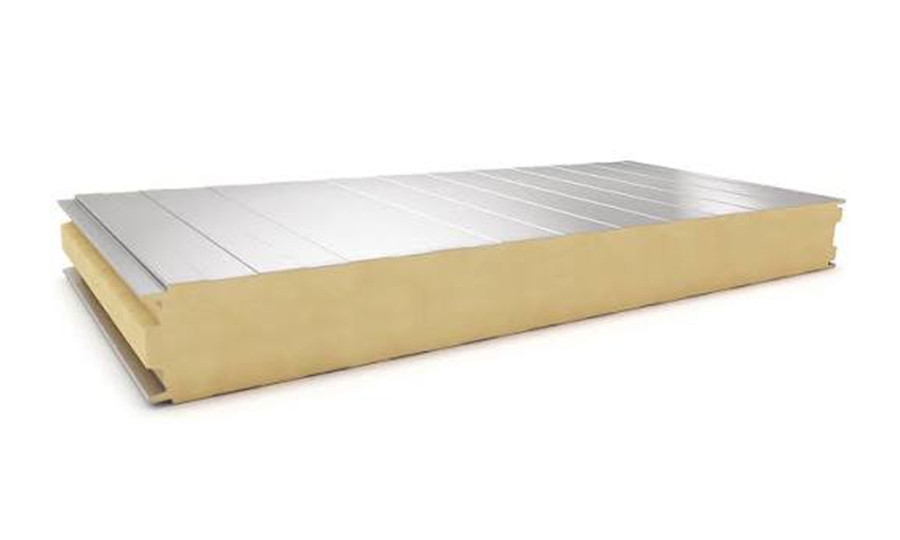
Choose PU for standard warehouse walls, general factory roofs, medium-temperature cold storage, clean rooms, and projects where fire codes are moderate and budget is a priority.
Choose PIR for cold storage at extreme temperatures, high-temperature industrial environments, projects in strict fire-code regions, and applications where long-term insulation stability justifies the higher upfront cost.
The simplest rule: if your project requires a B1 fire rating or operates outside -35°C to +80°C, PIR is the safer choice. If you are building a standard temperature-controlled facility and local codes permit, PU delivers solid performance at a lower price.
|
Feature |
PU Sandwich Panel |
PIR Sandwich Panel |
|
Fire Rating |
B2 standard, B1 with additives |
B1 standard, B-s1,d0 achievable |
|
Thermal Conductivity |
0.022–0.026 W/m·K |
0.019–0.023 W/m·K |
|
Temperature Range |
-35°C to +80°C |
-55°C to +120°C |
|
Relative Cost |
Baseline |
15–25% higher |
|
Foam Toughness |
Tougher, less brittle |
More brittle, requires careful handling |
|
Application |
General warehouses, standard cold storage, budget projects |
Strict fire codes, extreme temperatures, high-end cold chain |
For more information needed or any inquiry,please feel free to contact Yumisteel team.
Годы опыта



 Интернет Сервис
 +86-592-6095031
 manager@yumisteel.com
 Alina_Yuki
 +8613559086380+8615860744964
 русский
 English
 español
 português
 日本語
日本語