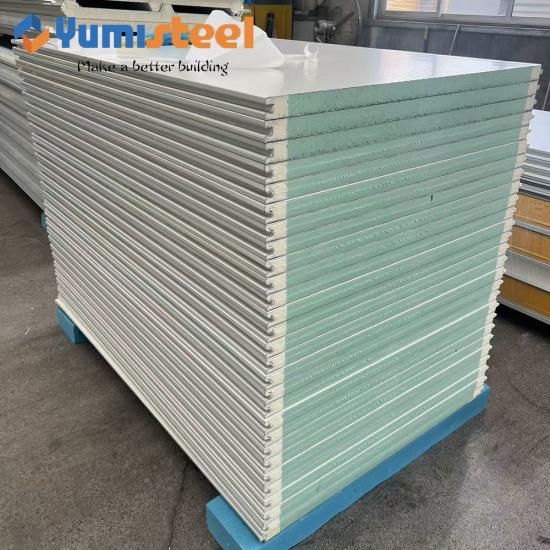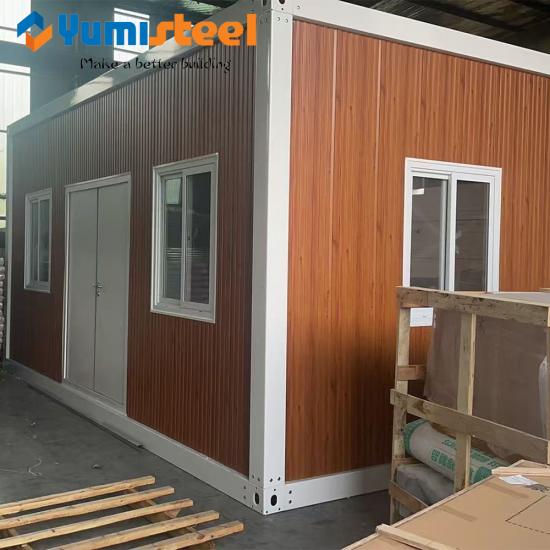

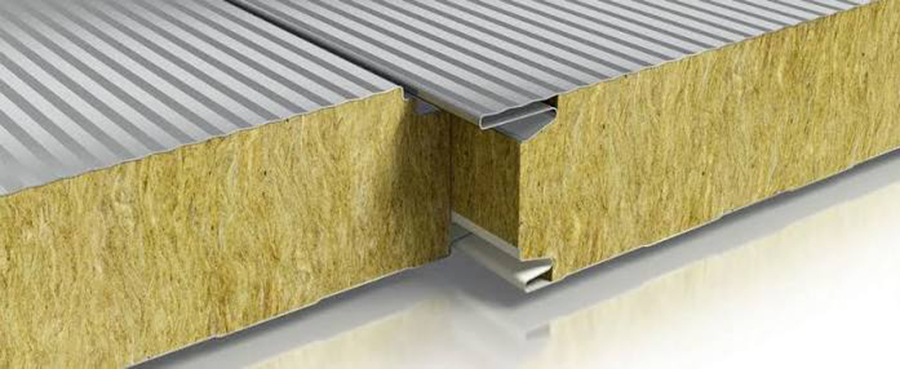
Sandwich panels are composite building elements consisting of two rigid facings (typically steel or aluminum) bonded to an insulating core such as polyisocyanurate (PIR), polyurethane (PUR), expanded polystyrene (EPS), or mineral wool (MW). Because these panels are widely used in industrial, commercial, and cold storage construction, understanding their fire performance is critical for compliance, insurance, and life safety. A common source of confusion is that "fire rating" is not a single property. It comprises two distinct concepts: Reaction to Fire and Fire Resistance.
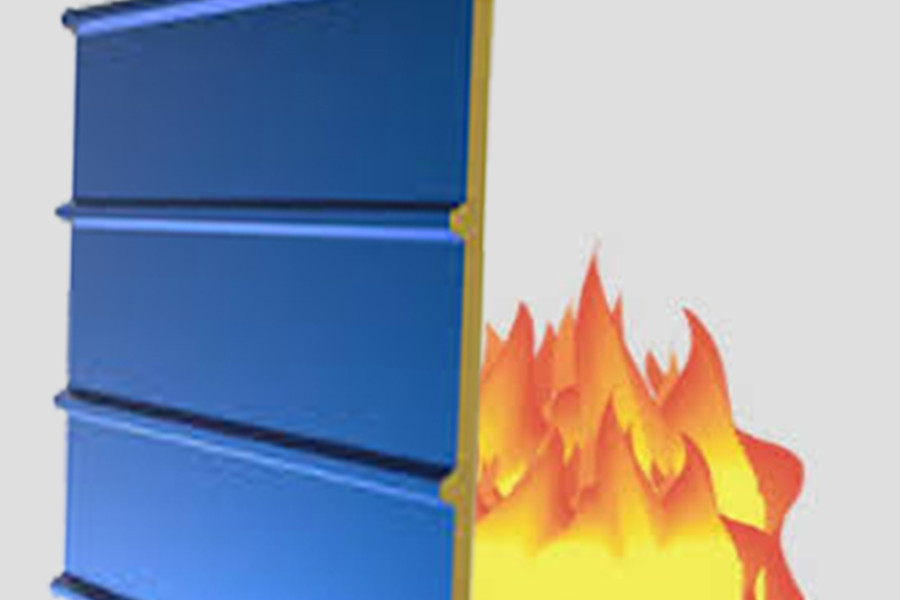
Reaction to fire describes how a material behaves when exposed to heat or flame, including whether it ignites, how much heat it releases, how quickly flames spread, and whether it produces smoke or burning droplets.
European Classification (EN 13501-1)
The Euroclass system assigns a main letter from A1 to F, supplemented by smoke (s1 to s3) and droplet (d0 to d2) sub classes:
A1/A2: Non combustible or limited combustibility (typically mineral wool cores).
B/C: Very limited to limited contribution to fire (common for PIR/PUR cores).
D/E/F: Medium to high contribution to fire (e.g., EPS cores without flame retardants).
A typical PIR panel may achieve B s1, d0, meaning very limited fire growth, low smoke production, and no flaming droplets. Mineral wool panels can reach A2 s1, d0, effectively non combustible.
North American Classification
In the U.S., reaction to fire performance is often evaluated via ASTM E84 (flame spread and smoke developed indices) and, for exterior walls, NFPA 285 (fire propagation of exterior wall assemblies). Insurers frequently require FM Approvals (FM 4880 for interior, FM 4881 for exterior), which are often stricter than building codes.
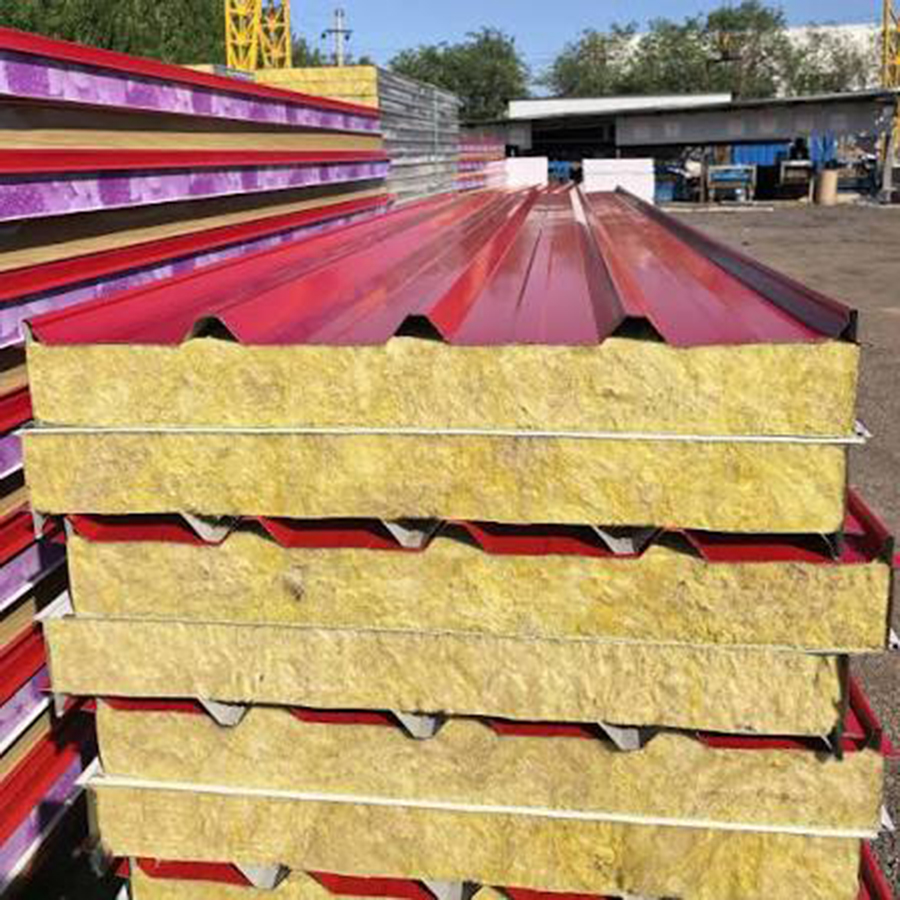
Fire resistance measures how long a panel assembly maintains its separating function and/or load bearing capacity under fire exposure. Ratings are expressed in minutes (30, 60, 90, 120) and use performance criteria:
E (Integrity): No passage of flames or hot gases.
I (Insulation): Limited temperature rise on the unexposed face.
W (Radiation): Limited radiant heat.
R (Load bearing): Structural stability maintained.
Common designations include EI 30, EI 60, or REI 120. Critically, fire resistance is a property of the entire assembly. Panel thickness, core type, span, fixings, and joint detailing all affect the result. Manufacturers' certifications apply only to the tested construction.
|
Aspect |
Reaction to Fire |
Fire Resistance |
|
Question answered |
How does the material fuel a fire? |
How long does the assembly contain a fire? |
|
Typical metric |
Euroclass (B s1, d0) / ASTM E84 |
Minutes (EI 30, EI 60) |
|
Depends on |
Core material chemistry |
Full assembly, thickness, detailing |
|
Regulatory driver |
Material and facade regulations |
Compartmentation and structural codes |
Specifiers should never rely on a single "fire rating" figure. Both the reaction to fire classification and the fire resistance duration must be verified against the applicable code, and fire resistance claims should always be traced to a tested assembly certification.
For more information needed or any inquiry,please feel free to contact Yumisteel team.
Годы опыта



 Интернет Сервис
 +86-592-6095031
 manager@yumisteel.com
 Alina_Yuki
 +8613559086380+8615860744964
 русский
 English
 español
 português
 日本語